What is Generative Engine Optimization (GEO)?
Generative Engine Optimization is the practice of shaping your content and online presence so generative AI models cite and recommend your brand in their answers.

Generative Engine Optimization (GEO) is the practice of shaping your content and online presence so generative AI models cite and recommend your brand in their answers. When a buyer asks ChatGPT, Claude, Gemini, or Perplexity which product to choose, GEO is the work that determines whether your name is in the response.
How GEO works#
GEO comes down to making your brand easy for a model to find, trust, and quote. Three levers do most of the work:
- Extractable content. Lead with the answer, use specific numbers and named entities, and write self-contained statements a model can lift without rewriting. Vague copy does not get cited.
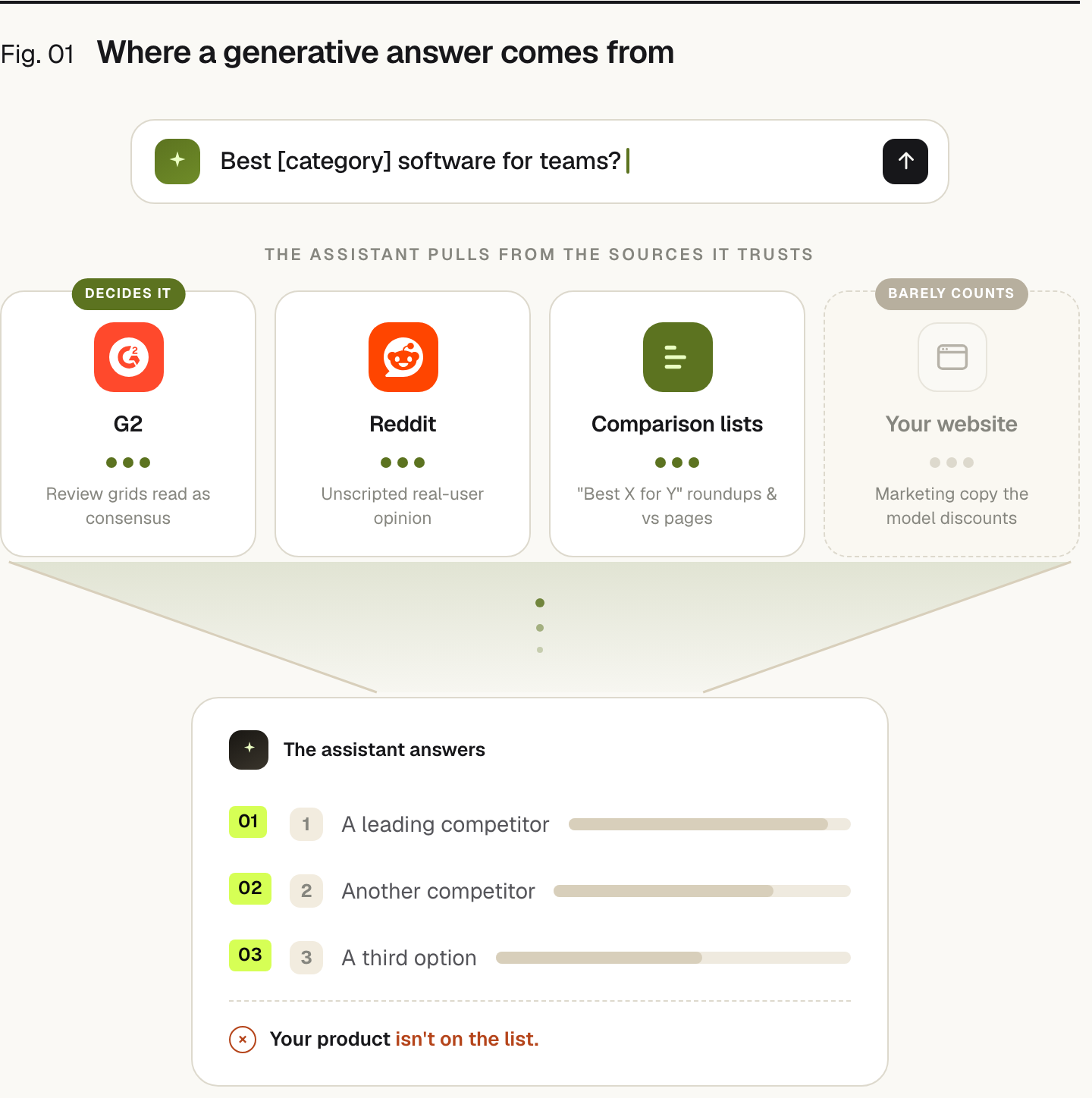
- Source authority. Models lean on sources they already trust. Earning mentions on high-authority sites, comparison pages, and active communities raises the odds you are pulled into an answer.
- Presence where models read. Generative answers draw on the open web, including Reddit threads, listicles, and review sites. Being genuinely present in those places now matters as much as your own pages do.
GEO vs SEO#
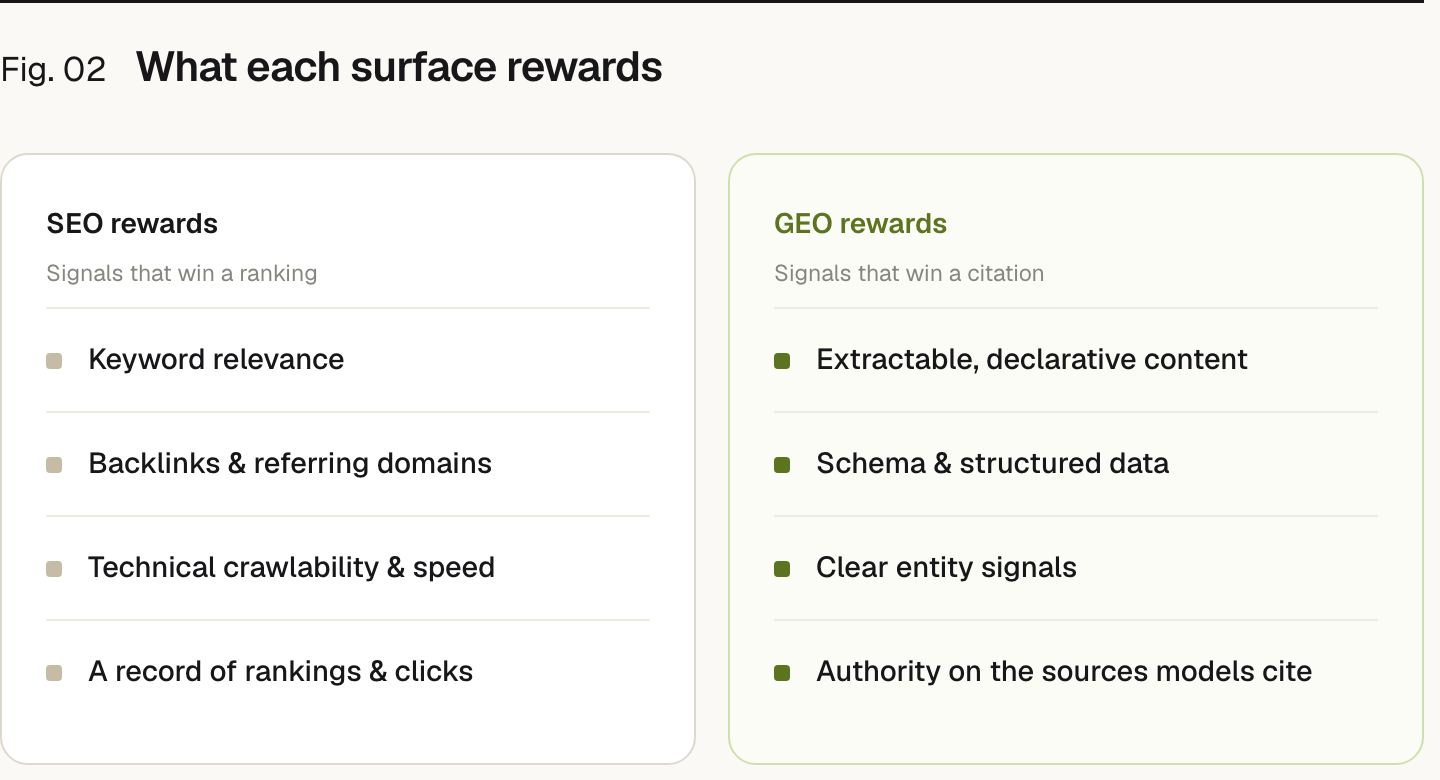
SEO optimizes for a ranking position in a list of links; GEO optimizes for inclusion in a single synthesized answer. SEO rewards keywords and backlinks. GEO rewards clarity, specificity, source authority, and community presence. The disciplines reinforce each other, the technical foundations are shared, but the tools and tactics built for one do not fully translate to the other.
GEO vs AEO#
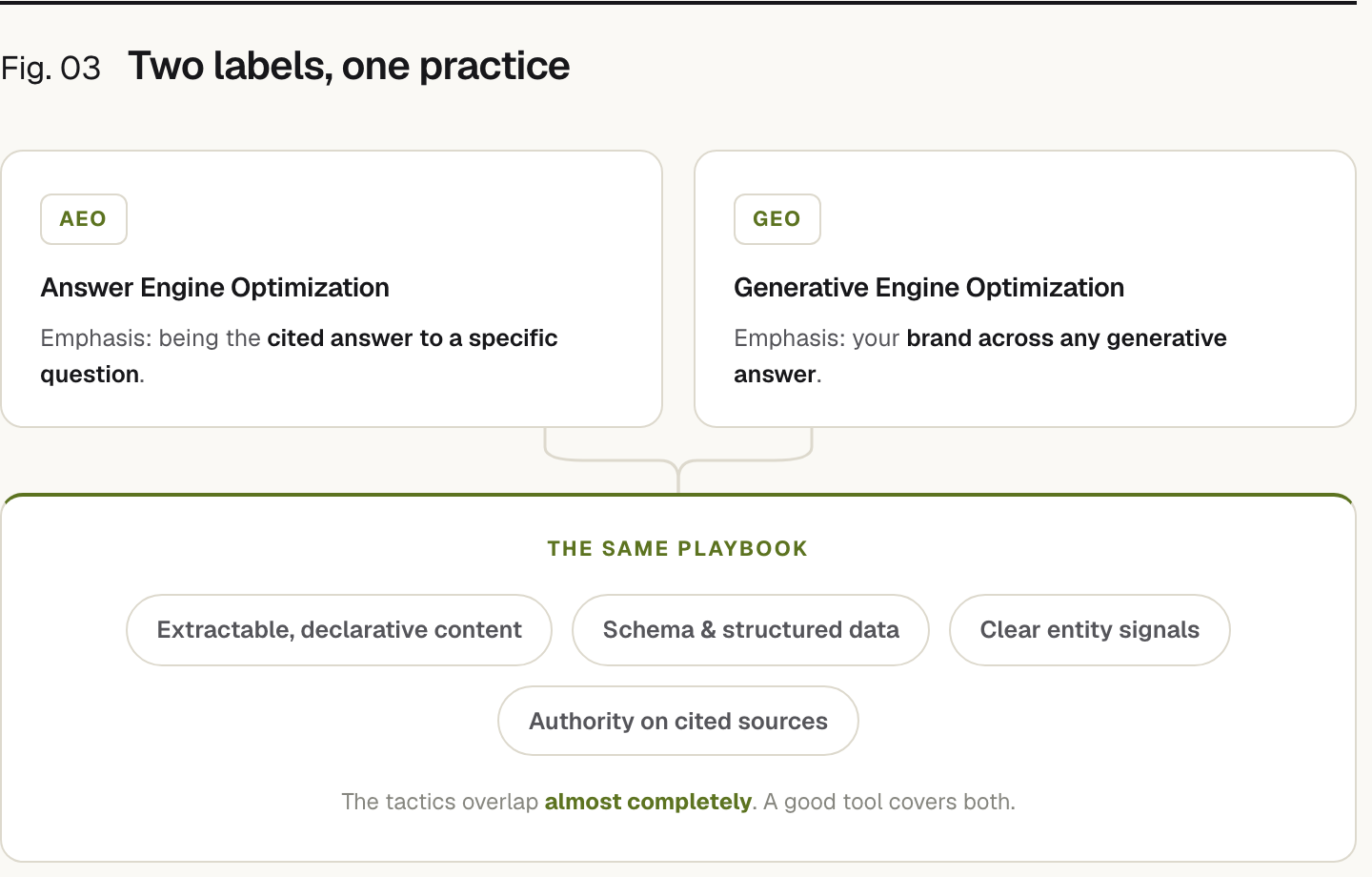
GEO and Answer Engine Optimization (AEO) describe nearly the same work. GEO is the broader framing, influencing generative output across any answer. AEO emphasizes being the cited answer to a specific question. In practice the playbook is the same, and most teams treat the terms as synonyms.
Why GEO matters#
People increasingly take the AI answer as the answer instead of scrolling ten blue links. If your brand is missing from that answer, you are invisible at the moment of decision, and the names already in the answer become the default that gets harder to dislodge every month. The honest version of GEO is not gaming models. It is being the clearest, most credible source on the questions your buyers actually ask.
How Visibly helps with GEO#
Visibly measures how often AI models cite you, benchmarks you against named competitors, shows which sources shape the verdict, and then ships the on-page, content, and off-page work that moves your share of voice. For the full picture of what a generative engine optimization tool should do, see our GEO hub. See where you stand with a free AI visibility audit.
When a buyer asks an AI which product to choose, GEO is the work that decides whether your name is in the answer.
- Is GEO the same as SEO?
- What is the difference between GEO and AEO?
- How do you measure GEO performance?
- How do you do generative engine optimization?
Frequently asked questions
Is GEO the same as SEO?
No. SEO works to rank a page in a list of links. GEO works to get your brand named inside the answer a model generates. They share foundations like crawlable content and authority, but GEO adds a layer focused on clarity, extractable statements, and presence across the sources models read.
What is the difference between GEO and AEO?
GEO (Generative Engine Optimization) is the broader term: influencing what generative models say about you across any answer. AEO (Answer Engine Optimization) is narrower, focused on being the cited answer to a specific question. Most teams use them interchangeably, and the tactics overlap almost completely.
How do you measure GEO performance?
Track your share of voice (the percent of relevant prompts where you appear), your citation rate against named competitors, and which source domains the models cite. You measure this across ChatGPT, Claude, Gemini, Perplexity, and Google AI Overviews, then watch the trend week to week.
How long does GEO take to show results?
Because models index fresh, well-structured sources quickly, citation movement often shows in 60 to 90 days, faster than traditional SEO ranking gains on a new domain. Clean definition and comparison pages can be cited within weeks.